
-
151
Projects submitted
-
74
Published projects
-
3
Comments left
-
6
days until voting starts
Next Gen RPA Platform
-
Project manager on customer side
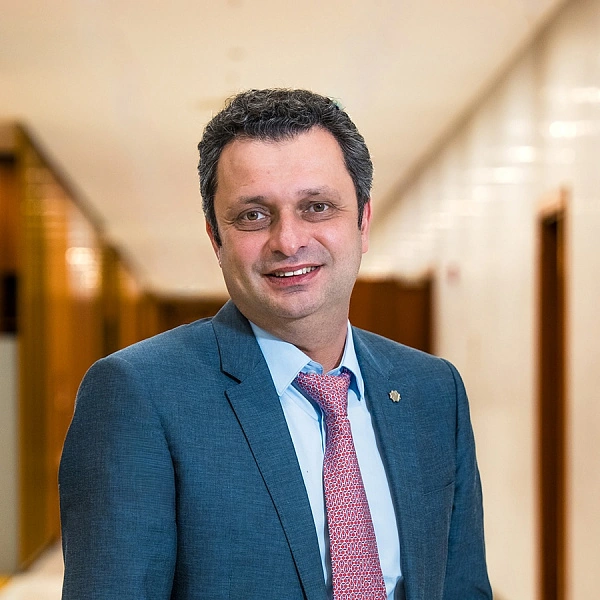
Mikhail Khasin
Halyk Bank
CIO
-
Category
-
Nomination
-
Goals
Turn RPA into a strategic in-house automation platform: scale automation of banking operations without growing the back office and without vendor lock-in. Goals: complete the migration of the platform to an in-house, fault-tolerant open-source stack with zero license fees; adopt an open-source workflow orchestration engine as the target core for robots and end-to-end processes; grow the portfolio to 100+ robots in production; make routine operations 10+ times cheaper than manual processing with payback within six months; cut robot development time to 2–3 weeks; embed locally hosted AI models within the bank's perimeter so robots can handle scans, documents and free text; build the RPA developer profession inside the bank.
-
Timeline
january, 2024 — march, 2026 -
Project completion year
2026
-
Project scale
2000 automated workplaces -
Results
100+ robots in production across operations, lending, finance, compliance and IT/HR; up to 7x higher throughput in automated processes; the same workload handled 10+ times cheaper than manually from the second year; payback within six months; a vendor-independent, fault-tolerant platform with an approved target orchestration architecture.
-
Project uniqueness
The AI Empowered RPA platform is built entirely in-house instead of a commercial RPA product — zero licenses and over $1M in annual savings versus an off-the-shelf solution. A robot is software code with full engineering practices: repository, CI/CD, monitoring, logging. Temporal, approved by the bank’s Architecture Committee as the target orchestration core, turns robots into durable workflows: each step is persisted, failures are retried automatically and long-running processes survive restarts. Robots scale in days: when volumes grew tenfold and more, 4 robots were added instead of hiring about 40 employees. AI models run locally inside the bank’s perimeter: customer data never leaves for external clouds, and high-risk decisions remain with people.
-
Software used
In-house RPA platform (Python); open-source workflow orchestration engine with durable execution (target core, pilot); open-source relational database in a high-availability cluster setup; CI/CD, monitoring, centralized logging and BI reporting tools; virtualized execution environment for UI robots; in-house document recognition service; locally hosted AI models on in-house GPU servers.
-
Solution from the Global CIO catalog
The project does not use solutions from the Global CIO catalog
-
Project implementation complexity
Migrating platform data from commercial and legacy databases to an open-source DBMS without stopping running robots, while moving to a high-availability setup. Adopting a workflow orchestration core changes how robots are designed: existing robots must be re-architected as workflows without disrupting production, and the target architecture had to pass the bank's Architecture Committee. Both workstreams were delivered by a small in-house team of four engineers alongside ongoing robot support. UI robots are sensitive to changes in interfaces, external websites and legislation. AI adoption in a bank is constrained by security: models must run locally, with human oversight of high-risk decisions.
-
Description
Context. The bank processes large volumes of routine operations: reconciliations, payments, repayments, document issuance, reporting, compliance checks and employee requests. Growing volumes and changing regulations were pushing the back office to expand.
Solution. Instead of buying a commercial RPA platform, the bank develops its own. Robots are written in Python and work in the bank's systems the way an employee does — on top of existing interfaces, without re-engineering the IT landscape. Code goes through CI/CD; robots are covered by monitoring, centralized logging and BI reporting.
Platform modernization (January 2025 – October 2026). Two workstreams, each staffed by two engineers. 1) Database migration (Q1 2025 – Q1 2026): platform data was moved from commercial and legacy databases to an open-source DBMS in a high-availability cluster setup — without stopping production robots. The legacy databases are fully decommissioned from the RPA stack. 2) Orchestration core (since summer 2026): an open-source workflow orchestration engine was selected as the target core for robots and end-to-end processes; the architecture was approved by the bank's Architecture Committee and a pilot is under way. Every process step is persisted, failures are retried automatically and multi-robot processes become manageable workflows instead of separate scripts.
Delivery process. Requests from business units go into a shared backlog (Demand Management), are prioritized within each business line and included in a quarterly release. Developing one robot takes 2–3 weeks on average; acceptance is done jointly with the business.
Intelligent automation. The next stage is IPA: locally hosted AI models extract data from scans and emails and classify requests, while robots execute actions in the systems; complex and high-risk cases are routed to an employee.
People. The RPA developer profession has been established: coding standards, a quick-start project template and a competency profile on the HR portal.
-
Project geography
Kazakhstan 600+ branches

-
Customer
Halyk Bank
Only authorized users can comment.
We suggest you log in or register.