
How a Real Estate Developer Tuned Construction Site Video Analytics and Raised the F1 Score from 0.5 to 0.95
29 July 2026
A regional real estate developer with 14 projects across two regions implemented Qmonitoring to improve safety monitoring at its construction sites. Timofey Lyutomsky, Director of Digital Transformation at the company, shared the implementation experience.
The system analyzes RTSP streams from construction site cameras, detects missing helmets and potential signs of fire, and sends detected incidents to a web portal and a project chatbot. Processing is performed by the vendor under a SaaS model using neural networks from the YOLO family and vision-language models, or VLMs.
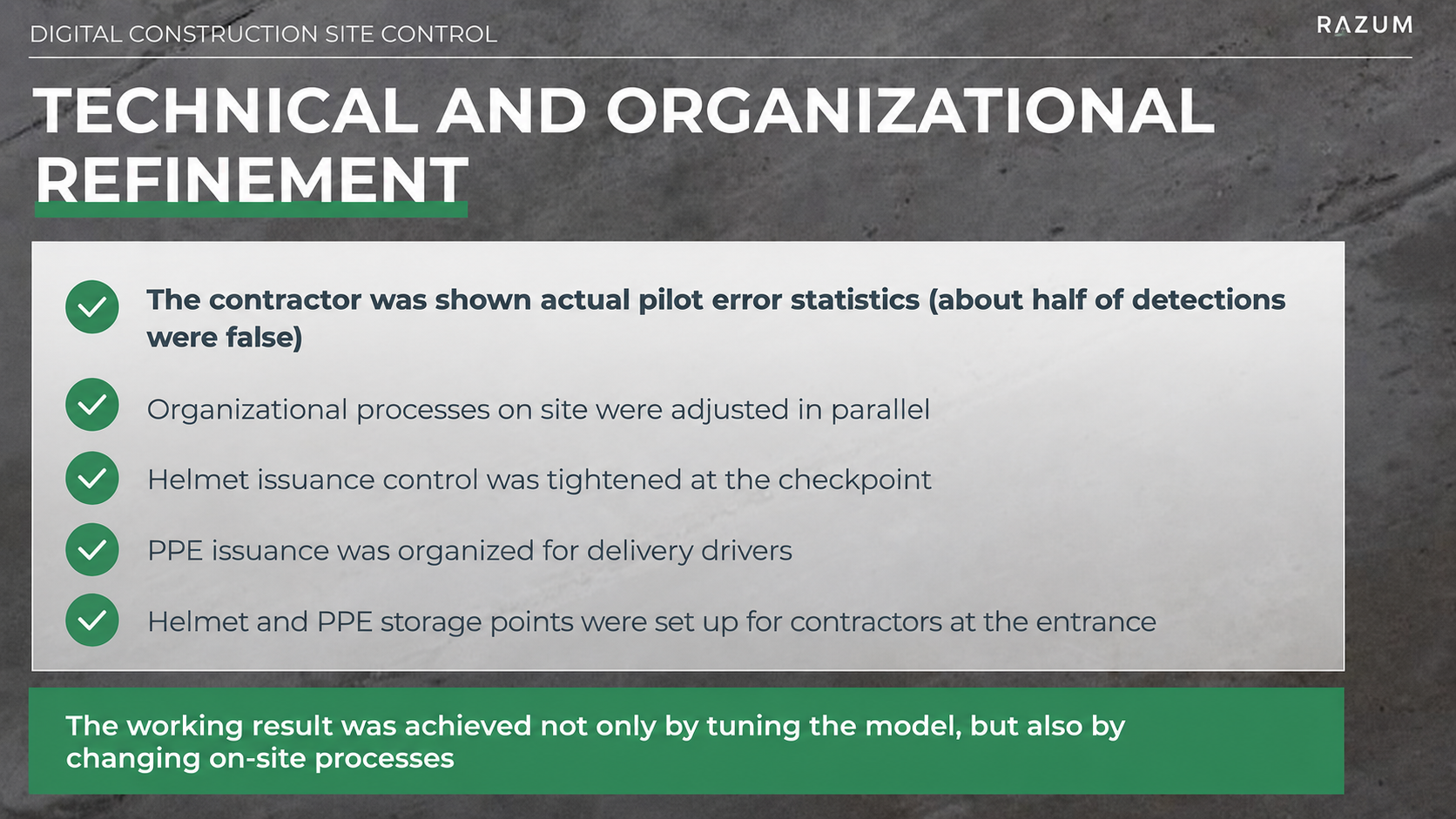
An initial pilot involving ten cameras achieved an F1 score of approximately 0.5, compared with the vendor's stated score of 0.95 for the base model. F1 is a combined model quality metric that accounts for both precision and recall. Scaling the solution required site-specific model tuning and changes to internal processes.
Business Need for Video Analytics
The initiative came from the CEO. The company's internal corporate security function acted as the business owner. The primary focus was occupational safety and the automated detection of violations. Collecting fines was a secondary objective.
The company selected Qmonitoring based on its balance of functionality, cost, and the vendor's previous implementation experience in construction.
Use Case Selection
The initial scope included four use cases. These were helmet detection, fire detection, equipment idle time monitoring, and dump truck load monitoring.
The company later discontinued the last two use cases. The equipment belonged to contractors, so its idle time did not have a direct impact on the developer's economics. Monitoring dump truck loads also produced limited business value.
The project retained helmet and fire detection. Information about detected incidents is sent to the project chatbot and the web portal.