

The Velocity Mandate: What the Business Will Expect from the CIO in the Next 1-3 Years
16 October 2026
Keeping systems running is no longer enough for a CIO. Over the next one to three years, business leaders will increasingly expect IT to accelerate processes, remove operational friction and introduce AI without sacrificing security or compliance. The challenge is not simply to deploy new technology, but to translate it into measurable business value and build enough trust for IT to become part of how the business moves faster.
Zeeshan Noorani, Head of IT at SGS, shows what this shift means in practice. He focuses on agentic AI, eliminating double work and sovereign cloud, then offers a practical push-to-pull approach for identifying business pain, translating technical initiatives into business outcomes and building stronger relationships with stakeholders.
The Paradigm Shift from Uptime to Business Velocity
If "the system didn't crash today" is still your only pitch to the board, you are running a cost center that is a prime candidate for outsourcing, because it creates no value. Business leaders will no longer settle for support of the strategy. They expect the CIO to be the business velocity, and the faster IT delivers value, the more the business listens and trusts digital technology as a creator of value. Zeeshan frames it as a move from IT as a service to IT as the operating system of the business.
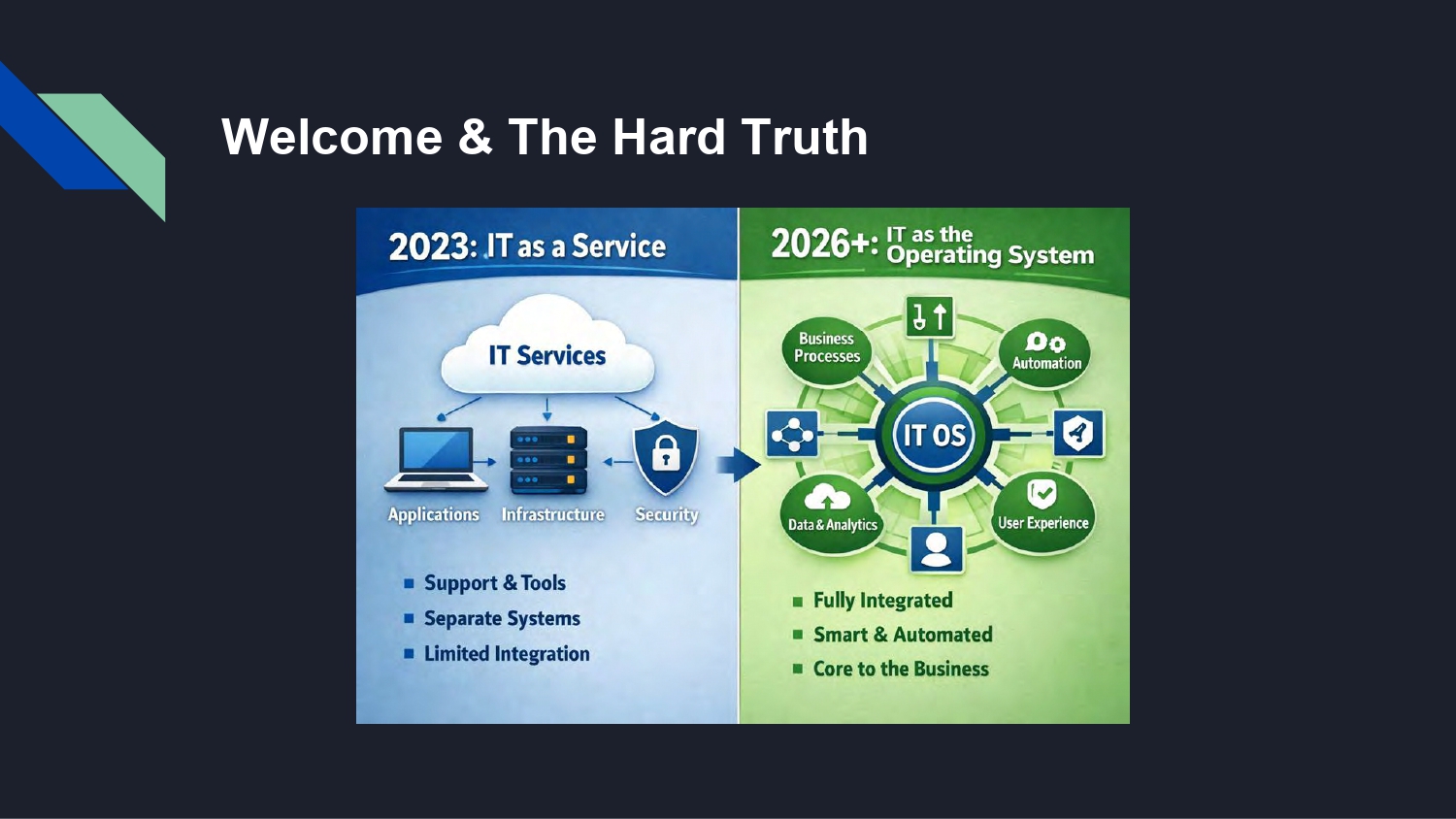
That shift is accelerated by what Zeeshan calls the rise of democratic IT and vibe coding. Business units no longer wait six months for IT to build an internal app and prompt solutions into existence themselves with autonomous tools. The CIO's job is moving from building everything to building a secure, compliant fabric of APIs that lets the company innovate safely without IT becoming a bottleneck, while giving the business an honest assessment of the shadow AI risk this creates. Titles are shifting too, and chief digital officer and chief AI officer roles are appearing alongside the CIO.
Three Expectations the Business Will Have
Business is tired of generative AI chatbots that simply summarize text. Zeeshan groups what comes next into three concrete expectations.
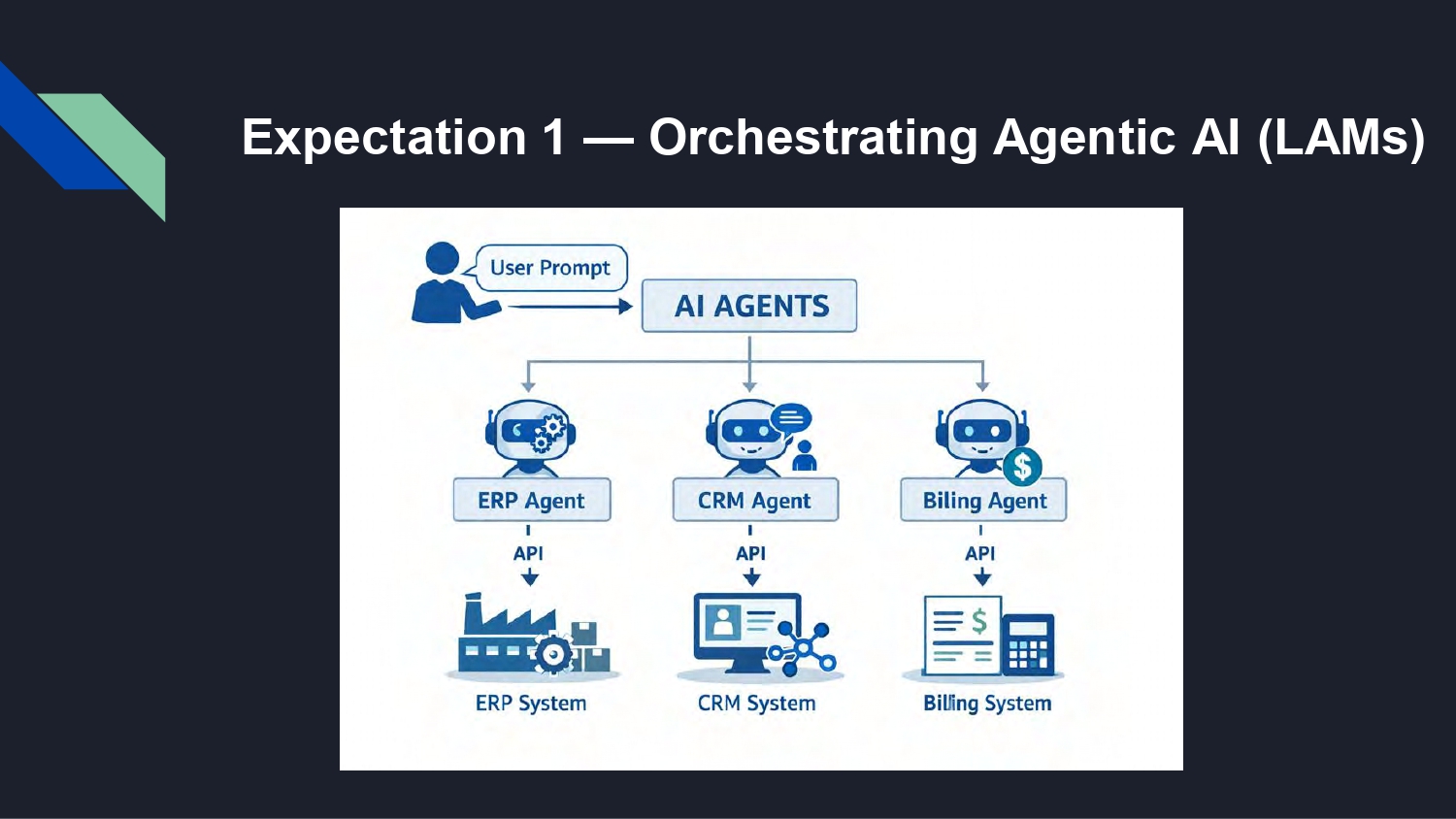
Orchestrating agentic AI. Within the next 12 to 36 months, boards will expect agentic AI, meaning large action models that do not just talk but execute. They log into legacy software, pull data, cross-reference it and complete transactions. Zeeshan calls this new manpower, extra hands for the organization. The CIO's mandate is to build the data fabric and API architecture that makes it possible without compromising security. He also warns about hype, since companies can invest heavily and get nothing back, so the CIO must give a realistic assessment of what is ready to deploy.
Eradicating double work. The business is bleeding productivity through friction between departments, where people copy and paste data between Excel files, Word documents and systems. Zeeshan's examples include HR manually copying data into accounting and a lab team manually transcribing oil sample results into an audit report. The CIO will be judged on process velocity, which means integrating data flows across HR, finance and operations so that people only review outcomes and do not handle data entry.
Sovereign cloud and digital immunity. Zeeshan considers this the hardest expectation, because the business wants total data protection and local compliance without losing the agility of global cloud. As data laws tighten worldwide, he recommends an automated digital immune system, with security and compliance embedded in the CI/CD pipeline rather than added as an afterthought. He points to hybrid as the prevailing trend, with AI agents working inside the corporate network so that no data leaks beyond it. Zeeshan also warns that information put into free third-party AI tools is available to others and can feed AI learning, so the company should provide corporate solutions instead.
Moving from Push to Pull
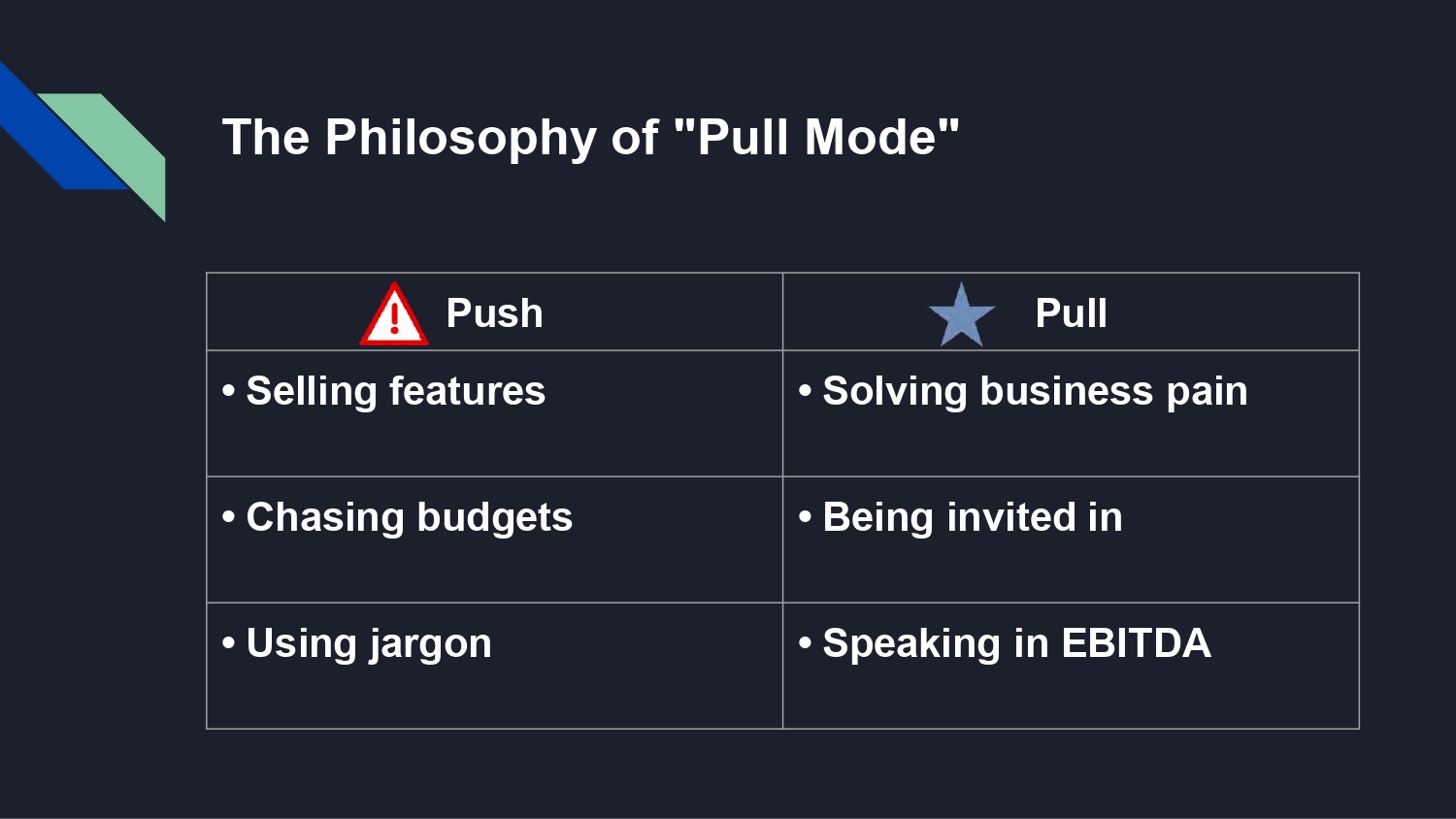
The interactive lab centers on the philosophy of pull mode. In push mode, IT sells features, chases budgets and leans on jargon, and meets resistance because a technology upgrade looks like a cost. IT also stays under constant stress, since people come only when something is broken. In pull mode, IT takes an interest in business pains, solves them first, gets invited in and speaks in terms the business tracks, such as EBITDA. Zeeshan pushes his own team toward pull mode as part of his long-term IT strategy, and once business leaders realize IT holds the key to their KPIs, they start approaching IT themselves.
He walks participants through two exercises. The stakeholder mapping matrix plots the roles a CIO works with by their interest in the project and their influence, showing who to engage and consult, keep satisfied, keep informed or simply monitor.
The strategic translation challenge asks CIOs to take an infrastructure project from their roadmap and rewrite its pitch, replacing technical features with the impact on margins, risk or speed to market. For example, instead of asking for budget to upgrade an ERP database and cut query latency by 40-50%, say that you are removing a backend bottleneck to unlock a 15% increase in supply chain processing speed.