

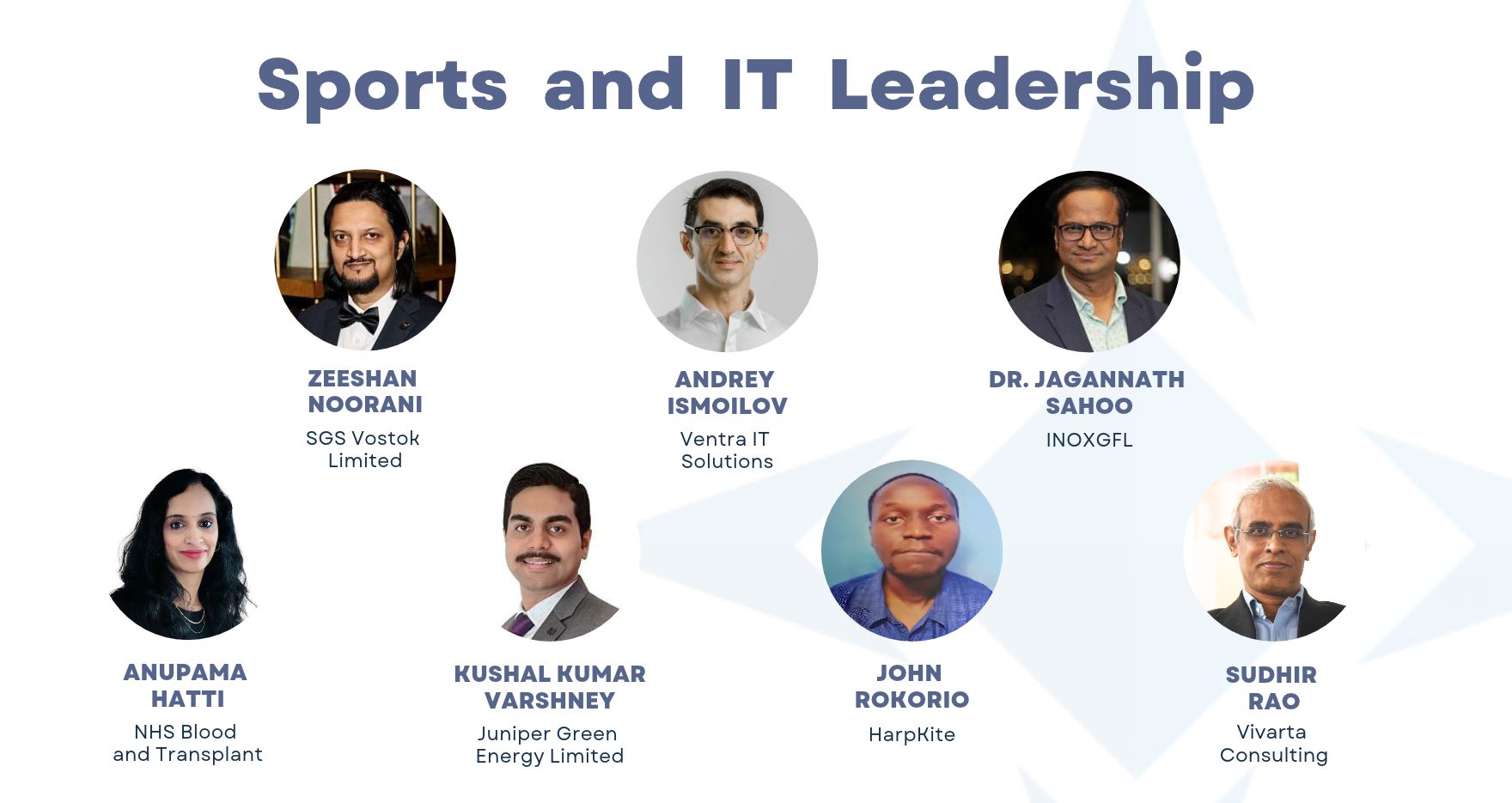
What Sports Have Taught Me as an IT Leader






Cases of the community members
View all cases
Factory Builder AI

Water Watch AI Plus


The Examen Sentinel project arose out of a desire to improve security. In partnership with RSA Laboratories, we have developed a solution that uses data analytics and AI to proactively identify potential problems, ensuring timely medical intervention.

In 2025, HR in the IT sector will face new challenges, which is due to both the ongoing development of technologies and the transformation of this highly competitive segment of the job market.

The Avia Code company has launched the BAGS ID system, allowing passengers to independently check in luggage in just 30 seconds. The solution reduces queues and improves service at airports. Konstantin Panev, Director of Digital Transformation, Airports of the Regions Management Company, shares his experience.

The professional community Global CIO brings together IT leaders from various industries. Understanding the differences in IT management across sectors like healthcare, retail, industry, and arts institutions is crucial. To explore the insights of Healthcare CIOs, the Global CIO editorial team interviewed Luciano Santos da Silva, CIO of the Zerrenner Foundation and one of the winners of the 2024 Project of the Year competition.

Director of IT and Business Process Automation at Binnopharm Group Evgeniy Zaitsev spoke about the implementation of a computer vision system in drug production, which provides 99% accuracy in detecting bottle defects.

The MENA region is emerging as a fast-growing IT hub, home to 1.5 million professionals, driven by strong government support, a thriving startup ecosystem, and major investments in AI and digital transformation. Natalia Domashenko, CEO at NGRS, moderated a panel discussion on the evolving IT job market in the region.

“The project approach is being replaced by a product approach: the company has proven the effectiveness of a phased transition when implementing automated control systems,” said Egor Skaletsky, project manager at EuroChem. Experience has shown that consistent changes in IT solution development methods can achieve additional business benefits.

Key trends such as artificial intelligence, automation and cloud technologies are opening up new opportunities. The main goal is not just the introduction of technology, but the creation of a culture in which employees accept changes and develop together with the company. With over 30 years of IT experience, Pernod Ricard's CIO brings a compelling perspective on digital transformation.

Increasingly, people and organizations are overwhelmed by the abundance of information. One of the most "affected" industries is information technology. IT specialists are at the forefront of the development of new technologies and, as a result, are bombarded with a huge amount of information and produce it themselves. What effective strategies exist to help in dealing with stress and information overload?


Representatives of FMCG companies and the agricultural sector discussed the reality of digital transformation in their industries at the panel discussion. The main question was whether there is a real transformation of business models, or if this term masks regular process optimization? The participants shared examples of digital technology implementation, discussed the impact of automation on personnel issues and data monetization opportunities.

Any organization, regardless of its scale and specifics of activity, makes purchases: from office supplies to components for complex production. How to understand that purchasing activities are organized effectively? Purchasing specialists themselves usually rely on three criteria: cost, that is, the ability to save the company's money, compliance with delivery dates and satisfaction of internal business customers. For company management, the main thing is that purchases are carried out as transparently as possible and in accordance with legal requirements.

Expert Andrey Golub presented the results of implementing generative micro automation in various industries: the technology increases productivity by 20-30% and reduces costs by up to 25% with proper integration.

In today's world, where customers expect instant and high-quality service, an omni-channel approach to interacting with consumers is becoming not just a trend, but a necessity. Companies that want to succeed must ensure uninterrupted customer support through a variety of platforms-from social networks and instant messengers to traditional communication channels.

Latin America’s tech scene is flourishing, but the region faces a pressing challenge: the demand for skilled IT professionals far exceeds the available talent pool.

As New Year approach, we are delighted to share warm greetings and wishes from the members of our community – IT executives and digital transformation leaders from around the world.